

THANK YOU FOR SUBSCRIBING

× 
Education Technology Insights Weekly Brief
Be first to read the latest tech news, Industry Leader's Insights, and CIO interviews of medium and large enterprises exclusively from Education Technology Insights
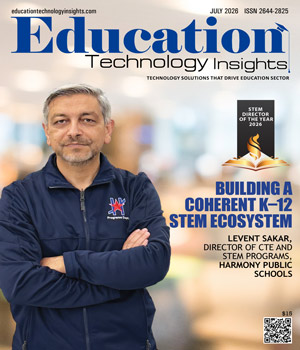
Levent Sakar is a seasoned STEM education leader and Director of Career and Technical Education and STEM Programs at Harmony Public Schools. He stewards K–12 STEM strategy through project-based learning, career-aligned pathways and interdisciplinary instruction. Known for championing student-centered, future-ready learning, he has supported national STEM initiatives, including NASA-linked collaborations while forging stronger connections between academic learning, technical skill development and real-world career readiness. Cultivating STEM Excellence from Classroom Insight One of the most defining dimensions of my 25-year career has been teaching physics and related science disciplines to students from varied academic, cultural and socioeconomic backgrounds. That experience shaped my conviction that every student can thrive in STEM when supported by the right instructional methods, environment and support structures. I have seen students once disconnected from science recover curiosity and self-belief when instruction became deliberate, relevant and student-centered. Those classroom experiences instilled a principle that continues to inform my leadership. Engagement is not incidental. It emerges from purposeful design, authentic relevance and learning environments that position students as active participants in their own development. That understanding evolved when I moved from classroom teaching into instructional leadership. Mentoring teachers, shaping professional development around genuine classroom needs and working alongside educators to solve instructional challenges showed me how those same conditions could be established across classrooms and campuses. Because my approach was grounded in lived classroom practice, it fostered trust and strengthened collective efficacy. Today, as Director of CTE and STEM Programs, I bring the same classroom-grounded lens to the design of STEM systems. Strong systems depend on rigorous curriculum, empowered
School Management System
More than 15 years ago, DataDesign Co-founder Dawn Verdick was taken aback by the news of a 12-year-old kid who committed suicide. The incident prompted a question - ‘Why should a child feel that hopeless and unsupported in a world with six billion people?’ This question would eventually shape the company’s direction. Verdick and Nina Magsaysay Rosete, Co-founder and COO, launched a nonprofit initiative to help K-12 students identify and articulate their goals and publish them as books. The turning point came when a school district superintendent invited them to a district cabinet meeting to provide feedback on their operational efficiency. What they observed was an environment where fragmented systems, disconnected data and manual reporting processes slowed critical decisions. Districts had access to data, but lacked systems that could turn it into timely operational insights for educators and administrators. This laid the foundation for DataDesign, a K-12 data intelligence company focused on helping school districts operationalize data through customized workflows and intelligent automation. Its student tracker feature helps teachers identify students who may be falling behind. The platform is used across attendance monitoring, transcript evaluation, student intervention tracking, registrar workflows and administrative planning. “We wanted to create systems that help schools act on information, not just report it,” says Rosete, chief operating officer.

Software and Technologies
Every day, school buses carry more than students. They carry schools’ responsibility, peace of mind for parents and the trust that every child will travel safely. For schools and transportation teams, meeting that expectation takes safety-first systems that are practical, affordable and easy to manage. NFT BusView, an intuitive school transportation platform, is built with that responsibility in mind. It is designed around four priorities that matter most in school transportation today. Child safety, affordability for every district, user-friendly design and real time customer support drive everything it does. Designed as a unified, internally developed platform, it brings together bus tracking, student monitoring, parent access, route creation and management, driver tools and integrated video surveillance into one connected system. This unified approach allows districts to monitor buses in real time, confirm when students board and exit, optimize routes, manage fleet maintenance, automate compliance reporting and communicate instantly with parents and drivers. Connected, Automated and Simplified “Our platform is structured as a single-vendor transportation system to replace the need for multiple vendors across routing, tracking, cameras, maintenance and reporting,” says Patrick Locke, managing director. “It simplifies administration while automating processes that were previously manual.” At the most basic level, schools need to know where their buses are at all times. BusView handles that with GPS-enabled tracking to track each bus’s location, speed, stops, idle time, mileage, engine hours and battery voltage. It also supports safe driving practices, generates detailed reports for TEA compliance or Medicaid reimbursement programs and even identifies peak ridership days and individual student mileage. This gives administrators a clear operational view at any moment. One of the biggest concerns for schools is knowing exactly where each student is. StudentView addresses that by logging every boarding and exit using RFID technology, including parent pickup reads. For districts that prefer alternatives to RFID cards, the system displays expected students at each stop on the driver’s device, allowing boarding and exit confirmation with a simple tap. If a student gets off at the wrong stop, something that can happen in complex family situations, schools can see it immediately instead of trying to piece together what happened after the fact. For parents, visibility matters just as much. ParentView, a mobile app, lets parents see buses en route, track their child’s journey, receive push alerts for delays, route changes, or field trips, and even submit adjustment requests online. For example, if a bus is delayed due to traffic or a breakdown, parents are notified instantly instead of waiting and wondering. Notifications automatically match the language settings on each parent’s device, so families receive updates in their preferred language without adding extra work for school staff. For transportation teams, routing is where most of the complexity sits. Bus Routing (RouteView) allows administrators to build and optimize routes, manage buses, students, and drivers, print route sheets, and adjust schedules as needed. It integrates with existing systems or operates independently, helping teams save time, reduce costs and keep route management straightforward. Planning for special trips is handled through QuickTrip and TripView. These tools manage scheduling, bus allocation, campus routing, approvals, cost estimates, vehicle reservations and required parent documentation in one place. Drivers get support through DriverView, a rugged tablet that provides real-time audio and visual directions, student data for pickups and drop-offs, pre- and post-trip checks, student authorization confirmation, disciplinary records, and assigned seating logs. For substitutes or shared drivers, SubDriverView offers a portable, WiFi enabled option that is ready to use without mobile data requirements. Safety and accountability are reinforced through CameraView. High-definition interior and exterior cameras, including wide angle fisheyes and rugged IP68 exteriors, integrate with GPS and WiFi for remote monitoring. If a driver triggers an alert, the system immediately queues the footage for review, allowing administrators and first responders to access critical video without delay.
Top School Dismissal App 2026
School dismissal processes often break down not because systems are absent, but because they fail to account for real-world variability. Students miss cues, cars wait for children who are not ready, and a single delay can disrupt the entire carline, extending dismissal times and creating confusion. SwiftDismiss addresses this challenge by focusing on how dismissal actually unfolds in practice. Its platform incorporates features designed to prevent small disruptions from escalating into system-wide delays. “SwiftDismiss includes many small but important features to catch these issues before they become a problem,” says Matt Rice, founder. Managing Variability in Daily Dismissal A key issue in school dismissal is that processes are designed for ideal conditions rather than everyday realities. Students may forget pickup details, move at different speeds or miss announcements, creating bottlenecks that slow down the entire system. SwiftDismiss introduces mechanisms to manage these variations in real time. Classroom displays include progress indicators that help students anticipate when to prepare for dismissal. Staff-facing prompts ensure that cars are processed without being skipped. These adjustments allow the system to absorb variability without breaking down. By addressing issues before they create delays, schools can maintain a steady flow of students and vehicles, improving both efficiency and predictability.

Student Information

The Future of Student Performance Prediction is Data-Driven Analytics
Eitel Lauria, Director of Graduate Programs, School of Computer Science and Mathematics, Marist College
Social and Emotional Learning

Expanding Career Pathways through Lifelong Learning and Alternative Credentialing
Jessica McLain, Director, Office of Lifelong Learning & Credentialing, University of Minnesota, College of Education and Human Development
K12

Advancing K-12 Infrastructure through Strategic Innovation
Dr. Andrew Wolfenbarger, Director of Infrastructure and Engineering, Loudoun County Public Schools

IN MY OPINION
E-Learning
Rebuilding Human Connection in a Digital World
Claude Toland, Director of Education, Universal Technical Institute Houston

LAST WORD
Student Engagement
Where People Thrive Rethinking Talent Development in Higher Education
Mariah Shelden, Director, Talent Development, Grand Rapids Community College
IN FOCUS

Smart Assessments: Shaping Tomorrow's Learning through Diagnostics
Diagnostic assessments improve teaching effectiveness, facilitate data-driven decision-making, and improve overall learning outcomes.

EDITORIAL
Driving Connected Intelligence in Education Technology
As institutions navigate increasing complexity, there is a growing need for tools that improve visibility, streamline processes and support better decision-making. In this edition of Education Technology Insights, we highlight organizations and leaders reshaping how education is delivered and supported through technology.
At the center of this issue, Levent Sakar of Harmony Public Schools is recognized as the STEM Director of the Year 2026. Through a STEM model that connects learning across grade levels, project-based experiences and the thoughtful use of AI, he has helped deepen student engagement in science, technology, engineering and mathematics. His approach focuses on introducing STEM opportunities early and equipping students with skills that link classroom learning to real-world experiences.
The organizations featured in this edition show how technology is influencing different aspects of education. NFT BusView, recognized as the School Transportation Solution Company of the Year 2026, helps schools manage transportation more effectively by bringing bus tracking, student monitoring, route planning, driver tools and parent communication together on one platform. DataDesign, recognized as the Top Data Intelligence System 2026, enables districts to make better use of their data, helping administrators identify issues sooner and make more informed decisions.
Leadership perspectives in this edition broaden the conversation around the changing needs of education. Dr. Claude Toland, Director of Education at Universal Technical Institute Houston, reflects on how digital communication is influencing human interaction and why maintaining face-to-face connections remains important. Mariah Shelden, Director of Talent Development at Grand Rapids Community College, discusses the value of personalized development in building stronger teams and supporting long-term institutional growth.
The organizations and leaders featured in this issue demonstrate how integrated systems, data intelligence and human-centered leadership continue to define the future of education technology. We invite readers to explore the insights presented throughout this edition.
