

THANK YOU FOR SUBSCRIBING

× 
Education Technology Insights Weekly Brief
Be first to read the latest tech news, Industry Leader's Insights, and CIO interviews of medium and large enterprises exclusively from Education Technology Insights
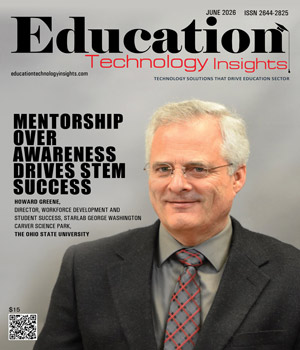
Dr. Howard Greene directs Workforce Development and Student Success at the Starlab George Washington Carver Science Park at The Ohio State University. Howard brings together partners from academia, government, and industry to collaborate in unique ways while launching sustainable space-based STEM education programs that generate awareness of space careers and contribute to the preparation of the next generation of space professionals. One problem I have noticed in Workforce Development is the prevailing belief that the ‘missing ingredient’ preventing youth from pursuing STEM careers is simply awareness. In other words, if we excite youth enough about STEM career opportunities, they will eventually choose and be retained in them. This simplistic approach has led to outreach programs in industry and academia that focus more on generating interest and excitement rather than guiding youth through a sustained journey toward developing self-efficacy and a strong STEM identity. As a result, we often participate as guests at one-off events such as school career fairs, science festivals, activity-based venues and motivational talks—efforts that primarily aim to raise awareness of the careers we enjoy. Don’t get me wrong— an exciting activity or a powerful speaker can provide youth with an incredible motivational springboard into a new involvement. But without follow-on investments into their lives, the initial interest generated at a single STEM event wanes and actual pathways to STEM careers never become clear. In the end, career outcomes are unchanged. We are left wondering why students aren’t motivated by our efforts and choosing these great careers. “The Best Way For Youth To Develop Career Confidence Is Through Mentoring Relationships With Passionate Professionals Who Are Willing To Guide, Support And Inspire Them.” Let me explain what I mean. Growing up, I had access to a wood shop in our basement. My Dad was the fixer and problem-solver in
Artificial Intelligence
What opportunities did generative AI create for improving medical education and clinical training? A few months after ChatGPT began reshaping conversations around AI, two medical students asked a more practical question. How can AI improve every step of medical training? Jonathan Theros, co-founder and COO of Dendritic Health AI, was one of them. He and a fellow medical student, joined by an AI engineer and a designer, had just taken their board exams and lived through the intense, fragmented study schedule of medical school. “We knew the problems in medical education firsthand,” says Theros. “AI could connect the entire learning process, from the first lecture to actually talking to a patient and make it more personalized and immersive for every student.” From that insight, Theros and his co-founders launched Dendritic Health AI with a clear mission: built by you, for you. How does Neural Consult connect different stages of medical learning within one platform? Its core product, Neural Consult, applies AI across the full medical learning process. It builds on-demand flashcards, supports deeper literature searches, simulates objective structured clinical examinations (OSCE) with AI patient encounters and delivers feedback tailored to each learner’s progress. For the first time, a student’s entire learning history lives in one place, making it possible to teach to the individual rather than the class. “Medical schools provide access to experts and real patients and that curriculum will always be the core,” says Soetikno. “What we want to add is precision education. Where are your gaps and how do we help you close them so you are ready to take care of real patients?” .

Software and Technologies

Over the past twelve months, dti Publishing Corporation has quietly but decisively reshaped the way students learn networking technology. Under the leadership of CEO Pierre Askmo, the company has focused on making complex concepts tangible and accessible. At the heart of this transformation is the company’s NetEmulator®, a browser-based platform that allows learners to construct, configure, and visualize networks in a controlled, guided environment. Unlike traditional courses that start with theory and expect students to memorize terminology before ever touching a device, dti Publishing has flipped the approach. Students begin by actively performing tasks, interacting with virtual network components, and receiving immediate feedback. By practicing first, they develop an intuitive understanding of concepts that becomes a foundation for learning the underlying theory. “What we’re hoping to achieve with this practice first approach, is that it allows students to develop mental anchors that make the theory that follows becomes far easier to understand, correctly interpret, and ultimately retain,” Askmo explains. This emphasis on experience before memorization has helped the company create a model that is not only more engaging but also improves retention, allowing students to connect abstract ideas to real-world applications. Making the Invisible Visible One of the challenges in teaching networking is the abstract nature of the subject. In a real network, data packets travel invisibly across wires, leaving learners to imagine how information moves and devices interact. .
Classroom Hearing Assistance Technology
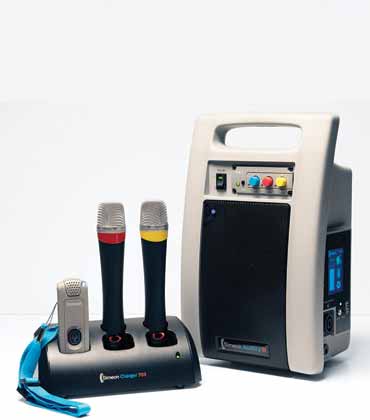
Simeon, a leading innovator in classroom audio amplification and assistive listening technology, is set to launch the world’s first classroom sound field system with Auracast, Bluetooth’s new broadcast audio standard. The Audita III, debuting in late 2025, moves beyond brand specific transmitters to a single global standard that simplifies audio management and adapts to every student’s needs. “Our mission has always been to level the playing field for students with hearing loss, giving them the same opportunity to participate as their peers,” says Jason Rude, president. “That mission has guided each step forward, including our systems already in classrooms today.” Simeon’s current Audita II systems make classrooms more inclusive by evenly carrying a teacher’s voice across the room and linking directly with hearing aids and cochlear implants. But Audita II achieves this through brand-tied accessories such as the Oticon EduMic, the Phonak Roger transmitter or the Cochlear MultiMic. In classrooms where students use different brands, multiple devices must be connected and managed. The setup is effective but often cumbersome in practice. Audita III changes that. The introduction of Auracast removes the need for manufacturer-dependent transmitters altogether. No matter the brand, one broadcast standard will reach every hearing aid and cochlear implant. A universal broadcast standard now delivers what once demanded splitters, custom wiring and multiple mics. The result is a classroom that is easier to manage, more reliable for teachers and fully inclusive for students. The impact is felt at every level. Students with hearing loss receive precise ear-level amplification and equal footing in discussions. Their peers benefit as pass-around microphones ensure that every voice is projected through the sound field system while simultaneously streamed directly into hearing devices, removing the hesitation from missing part of the conversation. Teachers avoid the strain of projecting their voices all day, relying instead on a lightweight pendant transmitter that carries speech naturally through the system. For schools, the shift means lower costs, less IT complexity and technology that remains relevant well into the future.
Language Learning Mobile Games And App

Only one percent of U.S. students who study a second language in classrooms go on to achieve fluency, highlighting the need for innovative solutions like FabuLingua. For Leslie Omaña Begert, co-founder and president of FabuLingua, this statistic highlights a flawed educational system. “Language that sticks is not memorized—it’s absorbed. FabuLingua creates the perfect conditions for language absorption,” she says. Her company has developed a patented platform that reimagines second-language learning by utilizing interactive stories, aligning itself with decades of research on how children naturally acquire their first language. FabuLingua is a language-learning app and platform that teaches Spanish and soon will expand to English for Spanish speakers. It serves families, teachers, and homeschoolers. Parents gain a structured way for children to learn at home. Teachers have access to dashboards, resources, and progress tracking, which saves them time while enriching their lessons. Homeschoolers can guide instruction even if they do not speak the target language. Employing the Science of Storytelling Instead of Memorization Instead of relying on memorizing vocabulary lists and grammar drills FabuLingua ensures that language is absorbed by creating an environment where students are deeply engaged with stories they can understand. Fun and interactive narratives provide learners with a vibrant and beautiful context to absorb language - rather than just memorizing isolated words and rules. FabuLingua's unique methodology, protected by a utility patent, has been recognized in expertled competitions such as the Language Flagship Technology award, underscoring its innovative approach. This recognition and endorsements from language educators and linguists highlight FabuLingua’s differentiation in a crowded edtech market. FabuLingua’s design reflects the science of second-language acquisition, specifically around what linguist Dr. Stephen Krashen refers to as “comprehensible input. Fluency develops when learners engage with input that is “comprehensible”, that is—that makes sense in context. To deliver this, the platform features “Magical Translations”, which provide spoken translations that offer clarity without interrupting immersion in the target language.
School Management System

Empowering Adult Education
Cynthia Ogaz, D.B.A., M.B.A., Managing Director - OPDACE (formerly OAICME), Texas Tech University Health Sciences Center
Software and Technologies

The Power of Continual Refinement: Building Sustainable Systems for Learning Tools
Robert Dillon, Director of Innovative Learning, School District of University City
Social and Emotional Learning

Reframing Social and Emotional Learning: From Reservations to Renewal
Jacquelyn Ollison, Ed.D. Director, Center for Research on Expanding Educational Opportunity (CREEO), University of California, Berkeley
LMS

The LMS as a Living Library: Designing Systems that Serve Humans First
William Corrigan, Manager, Wolfpack Learning (Director-Level Scope), Stony Brook University
Student Engagement

Technology That Supports Teaching
Dr. Michelle E. Eckler, Director of Instructional Technology, Stratford Public Schools
Digital Solution

Building Instructional Technology That Serves People First
Dr. Angela Camaille, Director of Instructional Technology, Support and Professional Development, Delgado Community College
E-Learning

Embracing the Pause: Protecting student agency and leadership in the age of AI
Dr. Lisa Yokana, Chief Operating Officer, Next World Learning Lab and Yerko Sepulveda, Head of Community Engagement and Wellness (Former Director of Community Engagement and Belonging), Porter-Gaud School

IN MY OPINION
Online Tutoring
AI Disrupting Education: One More Technology in a Long History
Jason Johnston, Ph.D., Executive Director of Online Learning & Course Production, University of Tennessee, Knoxville

LAST WORD
STEM
How to Recognize and Survive a Toxic Leader
Sten Swenson, Director of Information Technology, North Carolina State University
IN FOCUS

Operational Excellence: Investing in CRM and Marketing Automation for Growth
Integrated CRM platforms improve operational efficiency, customer engagement, and long-term business performance through data-driven strategies.

Adapting Career and Technical Education Assessments to Meet Industry Demands
Effective assessment strategies strengthen workforce alignment, operational planning, and long-term educational outcomes.
EDITORIAL
Human-Centered Learning in a Digital Age
Education is entering a period where technology decisions matter more than ever. The focus is now on using technology in ways that strengthen learning, critical thinking and long-term growth while keeping education human at its core. dti Publishing Corporation, recognized as Most Innovative Learning Platform of the Year 2026, reflects that shift clearly. Through NetEmulator and LabHUB, the company is reshaping networking education with hands-on, browser-based learning that helps students move from concept to practice with clarity. By combining immersive exercises, guided instruction and cloud-based accessibility, dti bridges theory and application, setting a new standard in adaptive learning for students and instructors alike.
Dendritic Health AI, recognized as the Top AI-Powered Medical Education Tools 2026, brings the same idea into medical education. Founded by medical students who experienced the limits of traditional medical training firsthand, the company created Neural Consult to offer a more connected, practical learning experience. Through adaptive study tools, AI patient simulations and personalized feedback, the platform helps students strengthen clinical judgment in real-world scenarios. Its expansion into nursing, pharmacy and other healthcare disciplines shows the growing demand for more practicedriven education.
This edition also recognizes Dr. Angela Camaille, Director of Instructional Technology, Support and Professional Development at Delgado Community College and Dr. Michelle E. Eckler, Director of Instructional Technology at Stratford Public Schools, both honored among the Top Directors of Instructional Technology 2026. Dr. Camaille continues to focus on expanding access, supporting faculty and building flexible learning environments that serve students more effectively. Dr. Eckler is leading a thoughtful, instructionalfirst approach in which technology strengthens teaching while maintaining consistency, accountability and balance across classrooms.
The insights shared by Cynthia Ogaz, D.B.A., M.B.A., Managing Director, Center of Accredited Interprofessional Continuing Medical Education at Texas Tech University Health Sciences Center, reinforce the value of continuing education, collaboration and professional development in building stronger institutions. Dr. Lisa Yokana, Chief Operating Officer at Next World Learning Lab and Yerko Sepulveda, Head of Community Engagement and Wellness at Porter-Gaud School, also explore the importance of preserving student agency as AI becomes more common in learning environments.
The leaders featured in this edition remind us that meaningful progress in education depends not only on innovation but on how thoughtfully people choose to apply it.
