

THANK YOU FOR SUBSCRIBING

× 
Education Technology Insights Weekly Brief
Be first to read the latest tech news, Industry Leader's Insights, and CIO interviews of medium and large enterprises exclusively from Education Technology Insights

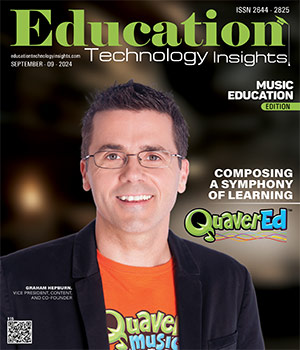
When you step inside a music classroom today, what you'll experience is amazing. Traditionally, you have heard the sounds of students playing various instruments, the sights of young minds concentrating on musical notation, and the collective energy of a group working in harmony. But now you also see the power of digital learning resources, engaging students as never before, in the medium they are most familiar with. All this together paints a vivid picture of an evolving educational landscape. The transformation is, in part, thanks to the Every Student Succeeds Act (ESSA), which has erased any lingering perception that music might be an academic afterthought. Instead, ESSA specifically identifies music education as a vital component of a child's well-rounded education, placing it on equal footing with subjects like math and science. Despite this progress, a significant void remains in recognizing music education's wide-ranging benefits. It's not just about learning to play an instrument or understanding musical theory. Music education reaches far beyond the notes and rhythms; it cultivates essential emotional and social skills and attributes crucial for a child's overall development. "QuaverEd's passion has always been music; this is how our company started. Music is a transformative force in the world, and particularly in education. It uniquely harnesses students' creativity and innovative skills, but also develops logic, self-confidence, and teamwork," says Graham Hepburn, the Vice President of Content, and Co-Founder. "We believe the emotional engagement music invokes should be used across all subjects. We believe the power of music shapes the lives of children in very positive ways." In an era of rapidly evolving educational paradigms, QuaverEd stands out as a leader in innovation and excellence in music education. The company has set new standards in how music is taught and significantly impacts the lives of tens of millions of students and over 28,000 educators around the globe. Fifteen of the 30 largest school districts in the U.S. have adopted QuaverEd as their elementary and middle school music curriculum. A Visionary Approach to Music Education Founded on the principles of inclusivity, creativity, and technological innovation, Dr. David V. Mastran and Hepburn founded the company in 2011.
Social and Emotional Learning

Social-Emotional Learning: The Frame That Holds the Portrait of a Graduate
Statia Paschel, Director of Social Emotional Learning and Cultural Proficiency & Inclusiveness at Austin Independent School District
Social and Emotional Learning

Fostering a Nurturing Learning Atmosphere for Better Outcomes
Stephanie Costner, Vice President, Curriculum Design & Instructional, New York Edge
School Management System

Upskilling: the New Revolving Door in Higher Education
Aimee DiBrienza, Assistant Director of Adult and Workforce Education at Southern Utah University
Music Education

Asynchronous Advantage: Flexible Learning Options while Maintaining Student Engagement
Matt Dyck, Director, Student Engagement and Experience, Thompson Rivers University
School Management System

AI, Neurodiversity, and Community
Deborah Hathaway, Director of Learning and Teaching, Office of Student Academic Success, University of Washington Bothell

IN MY OPINION
Social and Emotional Learning
The Fabric of Equitable Learning and Cognitive Growth: SEL is the Missing Thread
Andrew Gallagher, Senior Director - Social Emotional Learning at NYC Department of Education

LAST WORD
Unlocking Student Potential: The Value of English Language Learning Programs Partnering with Skills-
Amber Pleasant, Program Director for Adult Education and English Language Learning at Aims Community
IN FOCUS

Biggest Education Trends Of 2024
As 2024 approaches, educators and industry leaders anticipate significant transformations in education and edtech.

The Role of Technology And Diversity In Modern Music Education
Music education, once confined to traditional classroom settings, has evolved significantly over the past few decades.
EDITORIAL
Embracing Digital Tools and Global Diversity
In recent years, music education has undergone a profound transformation, driven by technological advancements, a growing emphasis on inclusivity, and the integration of innovative teaching methodologies. As we stand on the cusp of a new era, the landscape of music education is more dynamic and accessible than ever before, offering exciting opportunities for both educators and students.
Perhaps the most significant change in music education is the integration of digital tools and platforms. From online tutorials to sophisticated music production software, technology has democratized access to music learning. Apps like Yousician and Simply Piano have brought instrument learning to the fingertips of millions, allowing students to practice at their own pace and receive instant feedback. Moreover, platforms like Soundtrap and GarageBand enable young musicians to compose, record, and share their music with the world, fostering creativity and collaboration on an unprecedented scale.
Inclusivity has become a cornerstone of modern music education. There is a growing recognition that traditional Western-centric approaches to music education have often marginalized non-Western musical traditions. To address this, educators are increasingly incorporating diverse musical styles and traditions into their curricula, from African drumming to Indian classical music. This not only enriches students' understanding of global music cultures but also fosters a more inclusive learning environment.
The evolution of music education reflects broader societal shifts towards technology, inclusivity, and emotional well-being. As we look to the future, it is clear that the boundaries of what music education can achieve are expanding rapidly. With continued innovation and a commitment to accessibility, the next generation of musicians will be more diverse, creative, and emotionally attuned than ever before.
In this edition, we have featured QuaverEd. The company has set new standards in how music is taught and significantly impacts the lives of tens of millions of students and over 28,000 educators around the globe.
