
THANK YOU FOR SUBSCRIBING

× 
Education Technology Insights Weekly Brief
Be first to read the latest tech news, Industry Leader's Insights, and CIO interviews of medium and large enterprises exclusively from Education Technology Insights

Cascades by Metamorphix
Turning Student Signals into Coordinated Support
 Naren Balasubramaniam, Co-Founder and CEO
Metamorphix built Cascades for that gap. Its multi-tiered system of supports (MTSS) whole-child development platform serves as an operating system for student support, helping districts and education leaders see students in context, coordinate an accountable response and learn from what happens afterward.
That perspective is rooted in the background of Metamorphix Co-Founder and CEO Naren Balasubramaniam. A social worker by training, he began by working with families of students with developmental disabilities before becoming a healthcare executive, a role in which he learned to consider both individual and population-level patterns. That combination now informs Cascades, which connects individual student needs with patterns across schools, districts and communities.
“This is not a people problem. Schools are full of people who care deeply and act with urgency, and it’s not an effort problem. It’s a fragmentation problem,” says Balasubramaniam.
From Scattered Signals to Coordinated Support
A concern does not automatically lead to support. A referral has to reach the right team. Someone needs to own the next step, a support plan has to be put in motion, and staff need to follow up.
Cascades gives districts a way to manage that process without relying on scattered emails, forms and informal conversations. It helps teams see the whole child, coordinate the next action and learn whether support is working. The need is rooted in how fragmented student information can become. A teacher may see an academic signal, a counselor an attendance pattern and another specialist sees a behavioral or mental health concern. Each only gets a slice of the student’s picture. Cascades is designed to connect those views, offering four connected products that help move students forward.
It integrates grades, attendance, behavior, screening data and assessments through existing data connections, with daily refreshes. Connections can include OneRoster, ClassLink, APIs and secure CSV files, allowing districts to bring information from systems they already use into a shared view.
Rather than adding another isolated application, Cascades helps the systems already in place work together around the student. And because screening, intervention, and progress monitoring live in one platform, many schools find they can consolidate or retire standalone tools, and the costs that come with them.
 Holton Turns Referrals into a Connected Process
Supporting individual students is only part of the picture. That information can also help districts understand whether their broader support system is working.
At Holton Public Schools, Cascades changed how that support process moves from referral to response. It helped the district refine its referral workflow so a submission could be completed in roughly three to four minutes. The referral reaches the tier team while teachers can see what happens next, closing the communication loop.

“Cascades drove our alignment and our improvement process for our tier system,” — Joshua Glick, MTSS director and athletic coach at Holton Public Schools.

That work was not simply about implementing a platform. Glick points to Metamorphix’s willingness to listen to Holton’s needs and refine workflows as practical issues emerged. The resulting system brings academics, attendance, social-emotional learning and behavior into the same conversation, giving district leaders a clearer way to examine whether Tier 1, Tier 2 and Tier 3 supports are working.
Methuen Moves from Siloed Data to Better Decisions
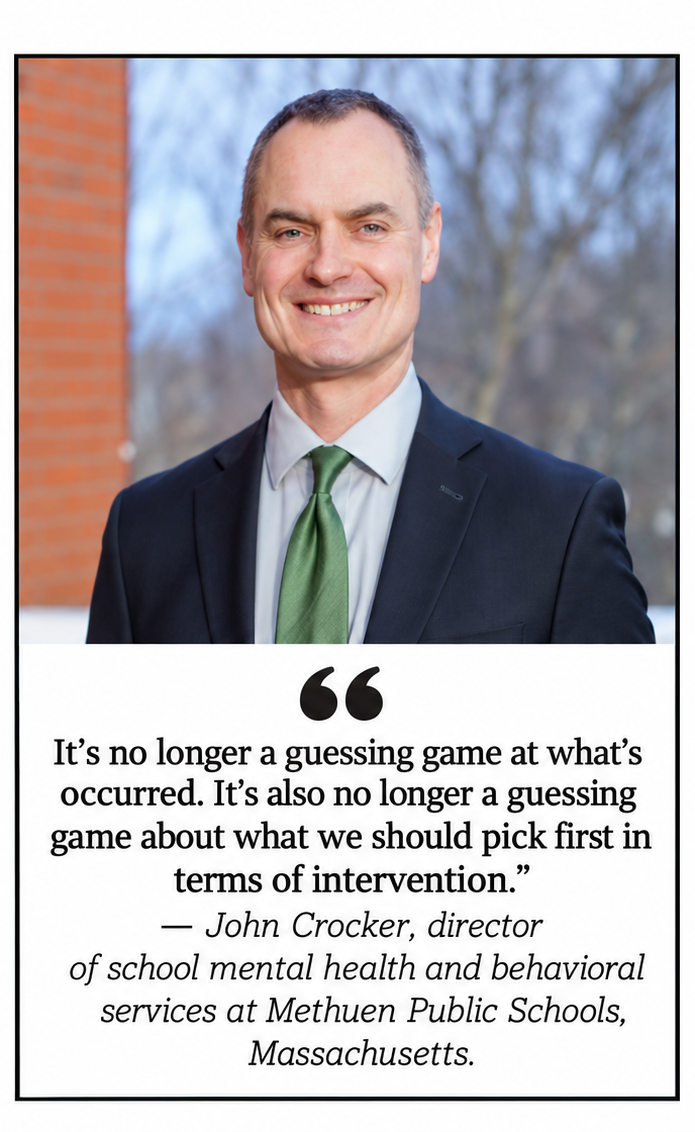
John Crocker, director of school mental health and behavioral services at Methuen Public Schools in Massachusetts, encountered a related challenge from a different angle. His district had spent years building a comprehensive school mental health system, yet academic, attendance, behavioral and mental health data remained siloed. Teams had abundant information but struggled to see how those data points connected to student needs and outcomes.
Cascades gave the district a way to bring those variables together while preserving a historical understanding of how students had been supported. That became particularly important for its multidisciplinary student support teams, which had previously lacked a strong view of past interventions and could potentially repeat approaches without knowing whether they had worked.
-
It’s no longer a guessing game at what’s occurred. It’s also no longer a guessing game about what we should pick first in terms of intervention," — John Crocker, director of school mental health and behavioral services at Methuen Public Schools, Massachusetts.
With Cascades, the district now has a single operating system for whole-child needs and has made the platform a central feature of its student support team discussions and decision-making. A multidisciplinary team of nearly 50 people can now examine student needs across categories, rather than considering each signal in isolation.
 The impact extends beyond visibility to the order in which teams consider interventions. Crocker notes that an academic intervention may produce a poor outcome if an unrecognized social-emotional or mental health need requires attention first. Cascades gives the team greater context for matching interventions, monitoring progress and deciding when to move to the next intervention.
From Fragmented Support to a Coherent System
The same whole-child approach extends into learning through Cascades GPS for Learning, one of the four Cascades products. It identifies students’ skill gaps and guides them toward appropriate pathways, while students who have mastered grade-level competencies can move ahead.
The change Metamorphix brings is ultimately less about adding another technology layer and more about making existing people, programs and information work together. Cascades makes the path from concern to response more visible, helping districts build a more coherent support system around the student rather than around individual silos. That approach underpins Metamorphix’s recognition as the Top MTSS Whole Child Development Platform 2026.
A Clearer Whole-Child View for MTSS Decisions
A student referral can move quickly from a classroom to an MTSS team and still stall when the team has to reconstruct context from separate systems. Attendance may sit in one application while behavior records live elsewhere, leaving staff to assemble a usable picture before deciding what supports their needs. For district executives, the buying question is less about adding another dashboard than reducing the distance between a concern raised by staff and a well-informed intervention decision.
An effective MTSS system makes the student record useful at the moment of review. A whole-child view should bring attendance, social-emotional learning, behavior and academics into one place without turning the interface into a collection of disconnected fields. Fresh data matters just as much. Information that lags behind the source systems can send teams into meetings with an outdated picture, while current data lets them spend more of the discussion on what the student needs. Decision support can add value here when it surfaces patterns or summarizes context without pretending to replace professional judgment.
Workflow design becomes visible once a referral enters the system. Staff should not have to master a lengthy intake process before asking for help, and tier teams should be able to route work without losing track of ownership. A useful platform keeps the handoff short and shows where a case sits. It also returns status information to the referring educator. The closed communication loop matters in districts where teachers are outside the tier meeting but still need to understand whether a referral was accepted or returned.
Districtwide MTSS also exposes a less technical purchasing issue. A product can fit the framework on paper, yet create resistance if staff see it as a separate administrative task. Buyers should look closely at how easily referral steps can be taught and whether the system can be adapted to existing district processes. Configuration and support are related, but they are not interchangeable. District teams need a vendor that can respond to changes in workflow and explain what can be adjusted without turning every local request into a long implementation project.
“Metamorphix’s Cascades gives districts a whole-child view across attendance, SEL, behavior and academics while keeping referral and caseload activity inside the same workflow.”
Executives should also test whether the platform improves alignment beyond individual cases. MTSS leaders often need to see where building practices diverge and where caseload patterns point to process problems. A system that connects student review with district-level visibility can make those differences easier to discuss. The useful signal is not a polished scorecard. It is whether the platform gives leaders enough shared context to tighten the tier process while keeping teachers informed.
Against these criteria, Cascades by Metamorphix is worth evaluating for districts seeking to improve MTSS case review and coordination across schools. Its Cascades platform platform consolidates attendance, SEL, behavior and academic information into a whole-child view while keeping referral and caseload activity within the same workflow. The referral process is built to reduce submission burden and return status information to referring teachers. Dhisha.ai adds decision support by interpreting emotional survey data alongside the wider student record and surfacing patterns for team review. The platform can also be adjusted around district processes, giving buyers a practical fit between staff adoption and better-informed MTSS decisions.
...Read more
| Share this Article: Tweet |
Company
Cascades by Metamorphix
Management
Naren Balasubramaniam, Co-Founder and CEO
Description
Metamorphix is an education technology company whose Cascades platform helps school districts and education leaders coordinate whole-child support by connecting student information, referrals and interventions, enabling teams to respond more effectively while identifying opportunities to strengthen their overall MTSS processes.