

THANK YOU FOR SUBSCRIBING

× 
Education Technology Insights Weekly Brief
Be first to read the latest tech news, Industry Leader's Insights, and CIO interviews of medium and large enterprises exclusively from Education Technology Insights

CT Innovates
Building Capacity for Better Civic Action

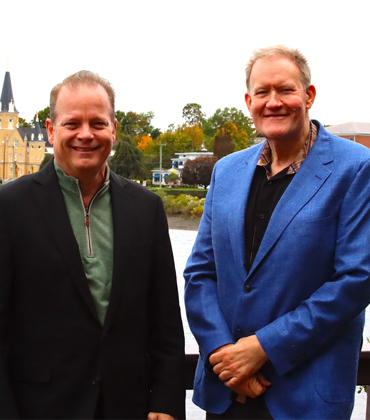 Christopher Bryant, Founder and Eric Thorsen, Co-founder
CT Innovates, founded by Christopher Bryant, addresses this challenge through its Civic Intelligence Platform, an AI-enabled application designed to turn fragmented public information into a scalable institutional capability. Bringing together meeting records, documents and community feedback, the platform uses AI to create structured, source-grounded intelligence that people can verify and act upon. The platform connects decisions, commitments, unresolved questions and ongoing issues across meetings and governing bodies so civic organizations can build a persistent institutional memory.
“Decisions and outcomes don't typically happen at one meeting. They happen across a range of meetings. Public information may be available, but understanding how decisions evolve requires time, continuity and a reliable way to connect the evidence,” says Bryant.
From Workflow to Platform
The Civic Intelligence Platform is designed to help civic organizations move from disconnected records to connected, usable knowledge. Its purpose is not limited to summarizing individual documents. Instead, it brings information together across meetings and governing bodies, allowing users to follow how an issue develops, distinguish formal decisions from ongoing discussions and identify commitments or questions that remain unresolved.
The Civic Intelligence Platform is designed to help civic organizations move from disconnected records to connected, usable knowledge. Its purpose is not limited to summarizing individual documents. Instead, it brings information together across meetings and governing bodies, allowing users to follow how an issue develops, distinguish formal decisions from ongoing discussions and identify commitments or questions that remain unresolved.
The platform draws on meeting records, supporting documents and community feedback to create structured intelligence grounded in its source material. As new information becomes available, the application maintains continuity, so users no longer need to reconstruct an issue's history each time a question arises. Civic leaders can use this knowledge to track progress, understand community concerns and prepare reliable public briefings and explainers.
Making that capability useful requires an understanding of both the technology and the institutions using it. CT Innovates organizes its approach around four stages: Understand, Learn, Apply and Operationalize. Organizations first identify their needs and existing challenges, then develop foundational knowledge before applying it to practical work and incorporating successful processes into regular operations.
AI prepares the work. Accountable humans verify, approve, decide and own it.

Its foundational training combines AI Basics with Responsible AI. Participants learn to verify sources, recognize uncertainty, protect sensitive information, minimize unnecessary data exposure and determine when AI may not be appropriate. The emphasis is on sound judgment and repeatable practices, not on accepting AI outputs without scrutiny.
These principles also inform how the platform is designed. AI helps prepare and connect information, while human review remains central to determining whether the resulting intelligence is accurate, appropriate and ready to use. The technology is intended to support civic work over time, including when volunteers or officeholders change and institutional knowledge might otherwise be lost.
Turning Meeting Records Into Continuing Knowledge
The Weston Democratic Town Committee (DTC) in Connecticut offers a practical example of the challenge CT Innovates is addressing. The committee had already been working to make local government easier to understand. Members prepared accessible summaries of Board of Education and Board of Finance meetings to help residents follow local developments.
The difficulty was maintaining continuity across meetings. Understanding the status of a major school project could require reviewing 10 to 12 meeting records and their supporting attachments, then reconstructing the project's history, identifying what had changed and determining which questions remained unresolved.
 The information existed across agendas, minutes, presentations and other public documents. But these records served different purposes and were not necessarily connected in a way that made the project's evolving status easy to understand. A summary of the last meeting might explain what happened that evening without showing how the discussion related to earlier recommendations, decisions or outstanding questions.
The Civic Intelligence Platform is built to close this institutional information gap. Its ability to connect records across meetings, trace decisions and commitments and keep unresolved questions visible responds to a challenge much wider than any single committee or project. The Weston example demonstrates why civic organizations need more than individual meeting summaries. They need a way to understand how information accumulates and changes over time.
CT Innovates worked with the Weston DTC to develop a repeatable workflow that connects agendas, minutes, presentations, attachments and subsequent official records. Supporting materials, including consultant presentations and bylaw reviews, could also contribute to the account.
The workflow brings together records from different meetings, so committee members can see how an issue developed over time. It connects claims to supporting evidence and keeps unanswered questions on the radar as new records come in. Members can then explain decisions and answer residents’ questions with confidence.
A civic record needs to do more than summarize documents. It must make clear what was discussed, what was recommended and what was officially approved. When records leave gaps, those gaps should be identified and filled in, not left to assumptions.
The platform applies this same principle through AI-enabled information processing and source-grounded outputs. Instead of presenting an isolated summary as a complete account, it connects the available evidence and makes the basis for each explanation traceable. The Weston experience illustrates the value of this continuity, while the platform is intended to make the underlying capability more scalable across civic organizations.
From Records to Civic Understanding
For a major school project, the workflow supports the creation of a three-to-five-page explainer showing where the project stands at a particular point in time. The document brings the project's progress, the discussions that have shaped it and the outstanding questions into a form that committee members can use when communicating with residents.
The explainer gives residents a more accessible account of a complex issue without requiring them to navigate the full collection of public records themselves. Committee members can also refer to the underlying information when checking details or explaining how the account reflects the available evidence.
The account is not intended to be a final statement on a project whose details may continue to change. A subsequent meeting could introduce new information, resolve an outstanding question or alter the direction of the discussion. The workflow gives committee members a basis for updating the explainer as developments occur, while preserving the distinction between the project's current status and the decisions or questions that came before it.
-
Decisions and outcomes don't typically happen at one meeting. They happen across a range of meetings. Public information may be available, but understanding how decisions evolve requires time, continuity and a reliable way to connect the evidence.
Consistency matters in volunteer-led civic work. Committee members have other responsibilities, and knowledge of an issue can become difficult to maintain when the people who followed earlier discussions move on. A repeatable process gives other volunteers a way to continue the work without depending entirely on an individual's memory or requiring them to reconstruct the project's history independently.
The need for a continuing, verifiable record also informs CT Innovates' development of the Verified Meeting Intelligence Record (VMIR). The concept aims to bring decisions, actions, commitments, supporting evidence and unresolved questions into a structured record as authoritative information becomes available. VMIR remains under development.
Keeping Human Judgment Accountable
Organized records alone are not enough. People still need to weigh the evidence, resolve conflicting information and decide what can be shared responsibly. AI can help organize information and prepare summaries, but accountability for civic decisions must remain with people.
“AI prepares the work. Accountable humans verify, approve, decide and own it,” says Bryant.
 CT Innovates builds review into its approach so people can verify sources, distinguish discussion from formal decisions and identify unanswered questions. Privacy, information sensitivity and the possibility of AI error must also be considered throughout the process. Material intended for public use requires human review and approval.
Making the platform useful requires both an understanding of civic institutions and strong software expertise. Knowing how public bodies operate helps identify the right records and understand the reasoning behind decisions. Software expertise turns that knowledge into technology that can connect information, support repeatable processes and make review responsibilities clear.
One cannot replace the other. Even a well-built system can misrepresent a decision if it overlooks institutional context. Likewise, civic knowledge is harder to apply consistently when research relies on manual effort and individual memory. CT Innovates brings both together in a platform designed to make civic information more organized, accessible and accountable.
Building Capacity That Lasts
The Weston DTC example reflects a broader challenge facing municipalities, nonprofits and community groups. These organizations often hold substantial amounts of information but have limited capacity to connect it. Their responsibilities continue even as volunteers, committee members and officeholders change.
Civic Intelligence is not limited to meeting records. It can also support civic-role mapping, candidate recruitment, understanding community concerns and preparing communications grounded in reliable sources. These activities all require organizations to connect information with local context, identify what is known and communicate it in ways people can use.
The Civic Intelligence Platform brings these needs into a technology-led approach. It connects information across time and across governing bodies, so organizations can build on existing knowledge instead of treating every new question as a separate research task. The resulting institutional memory can support progress tracking, provide a clearer view of community concerns and inform public briefings and explainers.
The recognition as Top Human Led Civic Intelligence Solutions 2026 reflects CT Innovates’ approach to making civic information more accessible and useful through technology, while keeping public decisions in human hands. Its Civic Intelligence Platform brings together fragmented records and community input to help civic organizations maintain continuity, understand developments and communicate with greater clarity.
Choosing Civic Intelligence that Preserves Public Context
Summarizing one meeting is the easy part. Holding the thread of an issue across months of public discussion is where civic intelligence tends to come apart.
The right platform shrinks that reconstruction work and leaves the context intact, because context is what gives each decision its meaning. Two questions sort the field. How does the system connect source material over time? And can a summary written months later still be traced to the evidence underneath?
Procurement should price in staff capacity as well, because maintaining a record by hand is work that someone has to find time for.
Records are rarely clean. Incomplete, inconsistent, published in different formats. Automated extraction will move through them faster than a person can, and speed on its own settles nothing. Whether an item remains unresolved. Whether a later meeting changed the status. Whether an attachment materially alters the interpretation.
“CT Innovates runs a human-led meeting intelligence workflow, pulling agendas, minutes, attachments, presentations and later official records into one continuing account of an issue.”
Which makes this a workflow purchase more than a software purchase. Ask a provider to show the point where a person reads the record, corrects what is wrong and moves the record on. If those steps sit hidden behind a generic intelligence layer, that is worth knowing early. Review points reveal something else too, namely how much institutional knowledge still has to live with one employee or one volunteer.
Then there is continuity.
Residents and committee members almost never want to know what happened on one particular date. They want to know where the school project stands now. How the board came to the position now on record. What changed at the meeting after that. What is still open.
A system that files every meeting as a separate document hands all of that back to a human to reassemble. The better ones hold unresolved items and push them into the next review, letting the record grow as the public process grows rather than starting over whenever fresh minutes land. And the continuity has to survive a change of staff, because civic work leans on people whose availability shifts.
Trust lives or dies on the evidence trail. A summary that cannot point back to an agenda, the official minutes, a presentation or a supporting document hands staff and volunteers a verification problem.
“The better ones hold unresolved items and push them into the next review, letting the record grow as the public process grows rather than starting over whenever fresh minutes land.”
Ask whether accounts stay source-linked and whether they refresh when later records arrive. Ask about formats as well, because a committee wants something short and internal while residents want something longer that explains, and both should come off one maintained record rather than two separate research jobs.
After publication, reaching the source trail should still be simple. Especially the day somebody disputes a point and the only answer is to retrace how the explanation was built. The purchase makes sense when repeated document review disappears and the evidence chain gets no harder to inspect.
CT Innovates runs a human-led meeting intelligence workflow, pulling agendas, minutes, attachments, presentations and later official records into one continuing account of an issue. Its process carries unresolved matters forward into subsequent meetings, preserving context as public decisions develop over time. From that maintained record come updated explainers or whatever other format is wanted, with nobody rebuilding the source history first. Evidence stays fixed to the account rather than drifting off from the records underneath. For education and municipal teams after repeatable publicrecord analysis with human judgment and source evidence still in the loop, the model is particularly relevant.
...Read more
| Share this Article: Tweet |
Company
CT Innovates
Management
Christopher Bryant, Founder and Eric Thorsen, Co-founder
Description
CT Innovates helps civic and public-interest organizations turn fragmented information into usable institutional knowledge through human-led Civic Intelligence. Its workflow-first approach combines AI, source-grounded analysis and accountable human review to strengthen understanding, preserve institutional memory and support better civic action.
