

THANK YOU FOR SUBSCRIBING

× 
Education Technology Insights Weekly Brief
Be first to read the latest tech news, Industry Leader's Insights, and CIO interviews of medium and large enterprises exclusively from Education Technology Insights

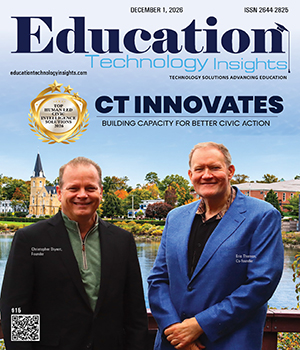
Public decisions rarely hinge on a single meeting or document. They develop through ongoing discussions, competing priorities, recommendations and formal decisions. For civic organizations, connecting this information to understand where an issue stands can be difficult, particularly when much of the work depends on volunteers. CT Innovates, founded by Christopher Bryant, addresses this challenge through its Civic Intelligence Platform, an AI-enabled application designed to turn fragmented public information into a scalable institutional capability. Bringing together meeting records, documents and community feedback, the platform uses AI to create structured, source-grounded intelligence that people can verify and act upon. The platform connects decisions, commitments, unresolved questions and ongoing issues across meetings and governing bodies so civic organizations can build a persistent institutional memory. “Decisions and outcomes don't typically happen at one meeting. They happen across a range of meetings. Public information may be available, but understanding how decisions evolve requires time, continuity and a reliable way to connect the evidence,” says Bryant.
Software and Technologies
Wide-format printers give schools the capacity to create large classroom visuals, but technical barriers often prevent teachers from using them to their full potential. Recurring breakdowns, complicated setup and connectivity problems can leave equipment idle, while limited training restricts printing to a handful of staff members. Poster Studio Express helps schools put that capacity to practical use through education-focused software and simplified installation. Most wide-format printer software serves architecture, engineering and construction professionals who need technical drawings and blueprints. Poster Studio Express developed Brightivity specifically for educators, combining classroom-focused templates and design tools with AI trained on curriculum standards. The software helps teachers create educational posters without navigating workflows built for technical specialists. “We wanted to give teachers every tool available with the latest technology but make it simple enough that anyone can sit down and use the software and print great posters quickly and easily,” says Mark Marais, founder and president..

Social emotional Learning Platform

Positive Action, a leader in social-emotional learning (SEL) for over four decades, has transformed from traditional print-based materials to the cutting-edge digital platform . This innovative platform empowers educators with customizable lessons, real-time feedback, and streamlined training, modernizing how SEL is implemented in schools and significantly enhancing student outcomes. The transition to a digital format was shaped by input from educators and other stakeholders, ensuring that Pasela integrates seamlessly with existing systems and workflows. “We worked closely with educators and end-users to gather feedback, ensuring that Pasela would meet their needs and improve upon the limitations of the previous print-based system,” says Alex Allred, president and CEO. The success of Pasela can largely be attributed to Positive Action’s strong emphasis on customer feedback. This customer-centric approach has allowed the platform to remain adaptable and responsive, preserving the core principles of Positive Action’s original materials while continuously evolving to meet the changing needs of educators. Digital Platform Built for Educators and Students Pasela is a powerful and intuitive platform designed specifically for teachers. Its content library offers over 2,000 lessons on a wide range of SEL topics, making it a comprehensive, one-stop solution. A key feature of Pasela is Content Genome, an innovative sorting system that categorizes lessons on key SEL topics like friendship, cooperation, and resilience. This tool allows educators to quickly find resources that perfectly align with their teaching goals. Teachers can search for lessons based on the themes they want to focus on, preview the content, and incorporate it directly into their lesson plans. The Content Genome simplifies content discovery, saving valuable time and allowing educators to focus on what matters most. Pasela also features a standout in-browser editor that allows educators to customize lesson content. Teachers can modify lesson settings, adjust story details, and update cultural references to ensure the lessons resonate with their students’ backgrounds and interests. For instance, if a lesson features soccer but the schoolcommunity is more interested in football, educators can easily alter the content. These personalized modifications can be saved and reused, ensuring the content remains relevant and engaging year after year. To support the effective use of Pasela, Positive Action offers comprehensive and tailored training for each client. The process begins with a thorough needs assessment, acknowledging that every school and district has unique challenges. Based on this assessment, trainers customize sessions to meet the specific goals and requirements of each institution. Whether helping educators implement lessons with fidelity or demonstrating how to use Pasela’s content discovery tools, the training ensures teachers are equipped to maximize the platform’s potential.
Student Success

Supporting Self-Regulation Through Visual Art Practices
Joy Davis, Director of Special Education, Twin Rivers Unified School District
Education Consulting

Rethinking Technology and Learning
Dr. Patricia Brown, Director of Technology, Ladue School District
School Management System

Beyond IT Support: Building Strategic Technology Partnerships in Higher Education
Steven Knowles, Executive Director for IT Client Services & Engagement, Information Technology Services, Brandeis University
E-Learning

From E-Learning to Schoolwide Technology
Joe Blanco, Chief Technology Officer, Iona Preparatory School

Embracing Human Connection in the AI Era
Jean Mandernach, Executive Director, Center for Innovation in Research and Teaching, Grand Canyon University

IN MY OPINION
Start With the Learner, Not Technology
Wendy Walter, Research Scientist, Associate Director, Center for Research on Learning and Technology, Indiana University Bloomington

LAST WORD
Digital Classroom
Keeping Human Connection in Higher Education's Digital Shift
J. Michael DeAngelis, Senior Associate Director, Communications and Technology, University of Pennsylvania Career Services
IN FOCUS

Redefining Modern Educational Experience with Visual Learning Technology
Visual learning technology boosts learner engagement, simplifies complex topics and encourages interactive learning.

Purpose-Driven Learning Environments with Human-Led Civic Intelligence Solutions
Technology can be used to facilitate multilingual collaboration, accessible communication, distributed participation, and increased opportunities for student involvement.
EDITORIAL
Balance AI Innovation with Human-Centered Leadership
As artificial intelligence and digital tools become more common, educational institutions are rethinking how they teach, manage operations, and support their communities. The challenge is to use these technologies to strengthen human connections, simplify everyday work and preserve institutional knowledge.
Recognized as Top Human-Led Civic Intelligence Solutions 2026, CT Innovates, founded by Christopher Bryant, helps public institutions address fragmented records and disconnected information. Its Civic Intelligence Platform combines meeting records, documents, and community feedback, turning them into organized insights that help governing bodies retain institutional knowledge. Guided by four stages: Understand, Learn, Apply and Operationalize, the company combines technology with Responsible AI training, ensuring people remain responsible for reviewing information and making civic decisions.
Poster Studio Express has earned Top Visual Learning Technology 2026 for making classroom visuals easily accessible through educationfocused software. Founded by Mark Marais, its Brightivity software offers curriculum-based design tools, Canva integration and AI image upscaling, while its PrintCents technology estimates pre-print paper and ink costs. Meanwhile, CXO Award recipient David Sarnik, Director of Educational Technology at Middle Tennessee School of Anesthesia, was named among the Top 10 Directors of Educational Technology 2026. Grounded in his military background, Sarnik prioritizes learner-centric tools, including single sign-on and advanced simulation environments, guided by competence, clear communication and purposeful innovation.
Educational leaders also stress strategic adoption and human-centered teaching. Joe Blanco, CTO at Iona Preparatory School, believes meaningful change requires school leaders to set an example, establish mission-aligned guidelines and encourage teachers to experiment together. Similarly, Jean Mandernach, Executive Director of the Center for Innovation in Research and Teaching at Grand Canyon University, encourages instructors to use AI for routine grading and content delivery tasks and spend more time mentoring students and building meaningful connections.
These examples show that successful educational technology is all about utilizing advanced tools purposefully and keeping people at the heart of learning. Explore our featured articles to see how schools and educational leaders are putting these ideas into practice.
