

THANK YOU FOR SUBSCRIBING

× 
Education Technology Insights Weekly Brief
Be first to read the latest tech news, Industry Leader's Insights, and CIO interviews of medium and large enterprises exclusively from Education Technology Insights
A featured contribution from Leadership Perspectives: a curated forum reserved for leaders nominated by our subscribers and vetted by the Education Technology Insights Advisory Board.

Allen University
Beyond Enrollment: Building a Culture of Care that Transforms Student Success in Higher Education
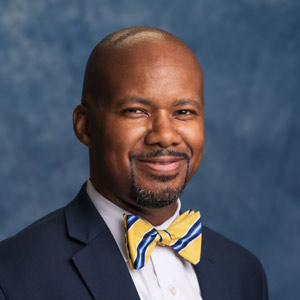
Andre S. Richardson
Andre S. Richardson, Ph.D., serves as Vice President for Student Affairs and Assistant Professor of Education at Allen University in Columbia, South Carolina. With 30 years of experience in education, he has held senior leadership positions at multiple Historically Black Colleges and Universities and served in education policy and regulatory roles with the U.S. Department of Education and the University of North Carolina System Office. A scholar-practitioner, accreditation evaluator and nationally recognized student affairs leader, Dr. Richardson is known for championing a Culture of Care on College Campuses. He received the 2026 NASPA Region III Outstanding HBCU/MSI Professional Award. His scholarship and leadership focus on student retention, institutional effectiveness, educational access and transformative higher education leadership.
Leadership Rooted in Purpose, People and Student Success
After nearly 30 years in education, I have learned that institutional success cannot be measured solely by enrollment numbers, graduation rates or financial performance. Although these indicators are essential, the true measure of an institution is its ability to create an environment where students feel valued, supported, challenged and empowered to succeed.
My leadership journey has taken me from the classroom to senior university administration, the U.S. Department of Education and the University of North Carolina System Office. These experiences have reinforced a fundamental principle, student success is not the responsibility of one department, it is an institutional commitment that requires intentional leadership, shared accountability and a culture of care.
I believe higher education leaders must move beyond managing student services to creating institutional ecosystems that support students academically, socially, emotionally and professionally.
Establishing a Culture of Care and Belonging
Throughout my career, I have championed what I call Establishing a Culture of Care on College Campuses. This philosophy recognizes that students arrive with different experiences, aspirations, responsibilities and challenges. Effective institutions must respond to these differences without compromising academic excellence or institutional expectations. A culture of care is not simply about providing services. It is about ensuring students experience meaningful connections with faculty, staff, administrators and their peers.
At my previous institution, our work included developing early-alert approaches, strengthening mental health support and addressing the needs of students. These experiences reinforced my belief that institutions must recognize the whole student rather than focusing exclusively on academic performance.
For me, belonging must become an institutional practice rather than an occasional initiative. Students should never have to navigate institutional barriers alone.
Connecting Enrollment, Engagement and Retention
One of the most significant challenges facing higher education is the tendency to separate enrollment management, student affairs and academic success into distinct administrative functions.
I believe these areas must operate as an interconnected student-success strategy.
"Student success is not the responsibility of one department, it is an institutional commitment that requires intentional leadership, shared accountability and a culture of care.”"
At Allen University, where my responsibilities encompass student affairs and enrollment management, this integrated approach has been particularly important. Our institution experienced enrollment increases in Fall 2025 and again in Fall 2026.
However, enrollment growth represents only the beginning of the institutional responsibility. Recruiting students without establishing the conditions necessary for their persistence and completion is an incomplete strategy.
Institutions should establish coordinated early-alert systems, strengthen academic advising, expand mentoring opportunities and use engagement data to identify students who may need additional support.
The essential question is not simply, "How many students did we enroll?" but rather, "How effectively are we positioning those students to remain, graduate and thrive?"
Using Policy and Data to Drive Institutional Transformation
My experience with the U.S. Department of Education and the University of North Carolina System Office shaped my understanding of the relationship between education policy, institutional accountability and student outcomes.
These experiences taught me that data should inform leadership decisions, but never replace the human understanding necessary to interpret them.
My scholarly research examining revenue sources and retention rates at private Historically Black Colleges and Universities further strengthened my appreciation for the relationship between institutional resources, strategic investments and student persistence.
Effective leaders must examine retention trends, student engagement, resource allocation and institutional policies to determine whether their practices are producing meaningful outcomes.
Data tells us where to look. Leadership determines how we respond.
Leading the Future of Student Success
As higher education confronts shifting student demographics, financial pressures, technological advancements and growing expectations for institutional accountability, leaders must embrace a more collaborative and student-centered approach.
I believe five leadership practices are particularly important, leading with empathy, removing institutional barriers, strengthening cross-campus collaboration, investing strategically in student support and establishing measurable accountability for student success.
Technology and artificial intelligence can enhance these efforts by identifying emerging student needs and improving service delivery. However, technological innovation should strengthen human relationships rather than replace them.
Ultimately, the institutions that thrive will be those that recognize student belonging, persistence and achievement as interconnected institutional priorities.
After three decades in education, my conviction remains unchanged, students do not succeed because an institution has programs. Students succeed when an institution intentionally creates the conditions in which they can flourish.
That is the responsibility of leadership. That is the foundation of a culture of care. That is the future of student success in higher education.
The articles from these contributors are based on their personal expertise and viewpoints, and do not necessarily reflect the opinions of their employers or affiliated organizations.
